Distributed Control System (DCS)
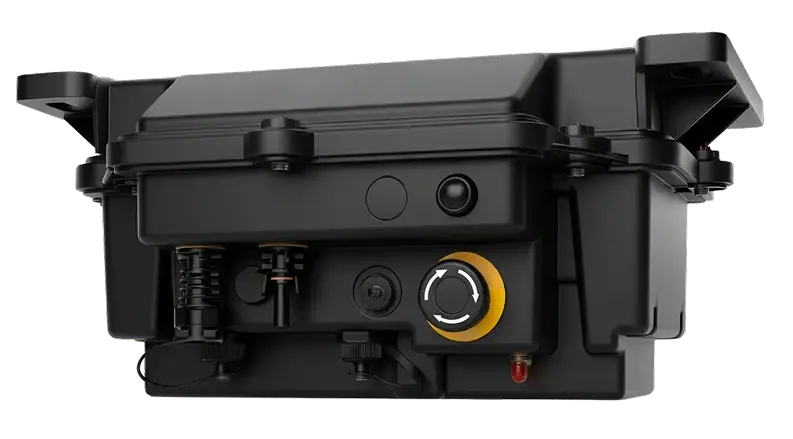
The DCS meets the needs of current trackers that require a robust and stable control unit capable of managing a multidrive track in a cost-effective way.
DCS allows for different types of devices along the axis of the tracker or between two rows of trackers in a Main / Secondary configuration.
Request a quote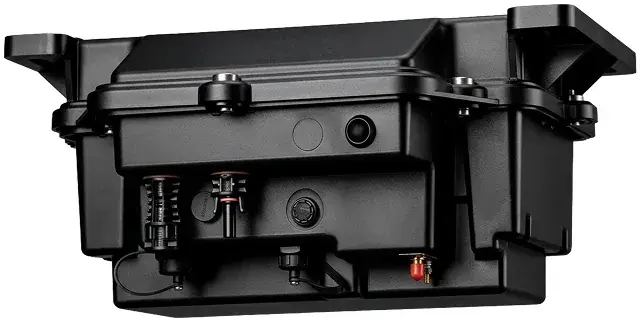
We maximize the power generation of your solar plant regardless of its size
Distributed Control System (DCS)
Flexible. Reliable. Inexpensive.
- Safe communications at tracker level thanks to PLC (local, no cybersecurity requirements)
- Flexible and scalable: A choice of devices can be added according to desired functionality, such as motors, inclinometers, locking units or agrivoltaics’ ground level interfaces.
Inexpensive and easy to install compared to mechanical transmission:
- A standard PV cable delivers power and communication from the main device to the secondaries
- Secondaries are cheaper than standard TCU
- The main device is string-powered, no need of grid power or dedicated PV pony-panel
- If sequential movements are allowed, price of the main device can be improved by reducing the required power.
DCS Utility Scale
Forget mechanical transmissions and discover the main features of Suntrack’s DCS (Distributed Control System) for multidrive single axis trackers or dual-rows.
| Tracker | Single axis | Multi-rows |
|---|---|---|
| Key benefits | The DCS configuration is a reliable solution for the largest tracker structures and bigger and more powerful current PV panels. | The DCS simplifies tracker assembly and reduce maintenance with an easier cleaning process between trackers. |
| Main Model | String Powered, AC-powered or Self-Powered. | |
| Output Power | 150 W | |
| Movement Options | Sequential or Synchronous (depending on the required power). | |
| Main-Secondary Communication | PLC through standard PV cable. | |
| NCU-Main Communication | Zigbee (Encrypted). | |
| Independent Row 3D Backtracking | Yes | No |
| Overcast | Yes | Yes |
| iStow | Yes | Yes |
| Main’s operating mode | 1 Main device per tracker controls up to 2 secondary devices in the same row. | 1 Main device controls up to 2 secondary devices in a dual-row configuration. |
| Secondary’s operating mode | Secondaries are not independent from each other. In case of sequential movements, they work within a configurable torsion limit in the axis. | Secondaries are independent from each other: if one stops, the rest continue tracking. |